📑 Table of Contents
- Tiruvannamalai Temple Dress Code for Devotees
- Snapshot / Quick Facts
- Tiruvannamalai Temple Dress Code – Detailed Guidelines
- Dress Code for Men at Arunachaleswarar Temple
- Recommended Attire
- Avoid Wearing
- Dress Code for Women at Tiruvannamalai Temple
- Recommended Attire
- Avoid Wearing
- Dress Code for Children
- Is There a Separate Dress Code for Girivalam?
- Recommended Girivalam Dress
- Avoid During Girivalam
- Dress Code During Festivals & Pournami
- Why Dress Code Matters at Tiruvannamalai Temple
- What Happens If Dress Code Is Not Followed?
- Do’s & Don’ts – Quick Checklist
- Do’s
- Don’ts
- 10) FAQs – Tiruvannamalai Temple Dress Code
- 1. Is there a strict dress code in Tiruvannamalai temple?
- 2. Are jeans allowed?
- 3. Can men wear shorts for darshan?
- 4. Is dress code enforced during Girivalam?
- 5. Are foreigners required to follow dress code?
- 6. What should I wear during abhishekam?
- References / Source Notes
Know the Tiruvannamalai temple dress code for devotees. What to wear, what to avoid, girivalam attire rules & pilgrim tips explained clearly.
Tiruvannamalai Temple Dress Code for Devotees
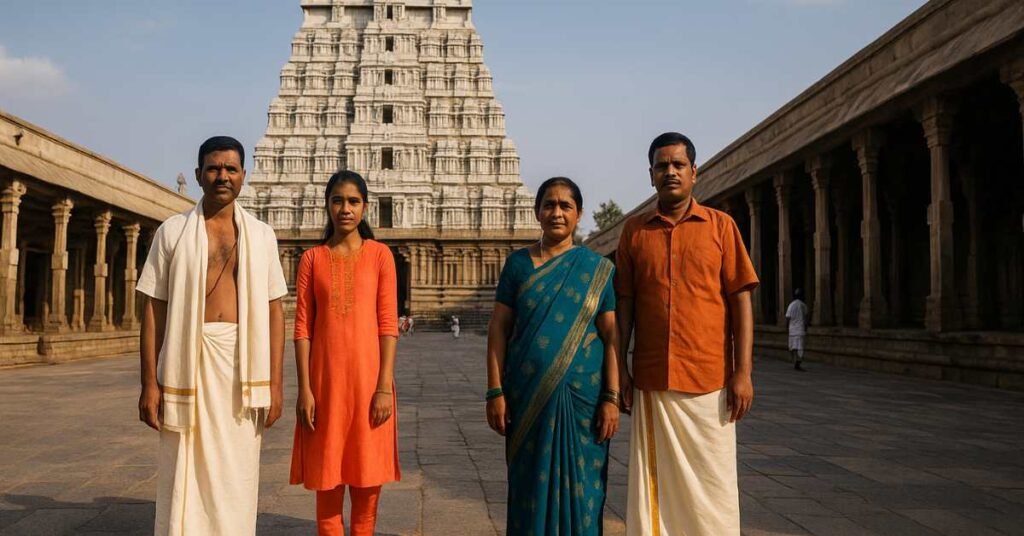
Following the Tiruvannamalai Temple Dress Code is an important part of temple etiquette and spiritual discipline. Sri Arunachaleswarar Temple is not just a place of worship but a powerful kshetra where tradition, devotion, and discipline are deeply respected. While the temple does not enforce an extremely rigid dress policy like a few South Indian temples, devotees are strongly expected to wear modest, traditional attire that reflects reverence toward Lord Arunachaleswarar and Goddess Unnamulai Amman.
This guide clearly explains what devotees should wear, what to avoid, girivalam dress norms, and practical tips for a smooth darshan experience.
Snapshot / Quick Facts
| Topic | Details |
|---|---|
| Is dress code mandatory? | Modesty strongly expected |
| Strict enforcement? | Moderate (stricter during festivals) |
| Applies to | Men, women & children |
| Girivalam dress rules | Modest & comfortable attire advised |
| Festival days | Dress checks more strict |
| Inner sanctum entry | Conservative clothing preferred |
Tiruvannamalai Temple Dress Code – Detailed Guidelines
Dress Code for Men at Arunachaleswarar Temple
Recommended Attire
- Dhoti / Veshti (with or without angavastram)
- Full-length pants with a decent shirt or kurta
- Traditional South Indian attire is highly respected
Avoid Wearing
- Shorts (any length)
- Lungis without proper upper clothing
- Sleeveless vests
- Torn jeans or low-waist trousers
Note: Men wearing shorts may be stopped near inner prakarams during peak days.
Dress Code for Women at Tiruvannamalai Temple
Recommended Attire
- Saree
- Salwar kameez / churidar with dupatta
- Long skirts with modest tops
- Traditional attire is preferred during pooja and abhishekam
Avoid Wearing
- Short skirts
- Sleeveless or deep-neck tops
- Transparent or tight-fitting clothes
- Western party wear
During festival days and special poojas, women wearing inappropriate attire may be denied close darshan.
Dress Code for Children
- Children are generally allowed flexibility
- However, decent and modest clothing is advised
- Avoid very short dresses or sleeveless outfits for older children
Is There a Separate Dress Code for Girivalam?
Girivalam (circumambulation of Arunachala Hill) does not have a strict dress code, but tradition and practicality guide attire.
Recommended Girivalam Dress
- Light cotton clothes
- Loose-fitting traditional wear
- Shawl or angavastram
- Footwear allowed (barefoot optional)
Avoid During Girivalam
- Heavy synthetic clothes
- Short or revealing outfits
- Dark colors at night (safety concern)
Dress Code During Festivals & Pournami
On days like:
- Pournami Girivalam
- Karthigai Deepam
- Pradosham
Dress discipline is more strictly monitored, especially:
- Near sanctum areas
- During abhishekam entry
- Early morning poojas
Pilgrims are advised to dress conservatively to avoid inconvenience.
Why Dress Code Matters at Tiruvannamalai Temple
According to Saiva tradition:
- Temples are energy centers
- Modest clothing maintains ritual purity (aacharam)
- Dress reflects inner humility and devotion
Local belief holds that Arunachala responds more to surrender than appearance, yet discipline enhances spiritual receptivity.
What Happens If Dress Code Is Not Followed?
- Entry may be allowed only up to outer corridors
- Close darshan may be restricted
- Devotees may be advised to change clothes
- In rare cases (festival days), entry may be denied
- Some stalls near the temple sell dhoti, dupatta, and shawls for immediate use.
Do’s & Don’ts – Quick Checklist
Do’s
- Wear clean, modest clothing
- Carry a shawl or dupatta as backup
- Dress traditionally during special poojas
- Respect temple volunteers and instructions
Don’ts
- Avoid shorts, sleeveless wear
- Do not argue with security staff
- Avoid flashy or party attire
- Avoid offensive symbols or text on clothes
10) FAQs – Tiruvannamalai Temple Dress Code
1. Is there a strict dress code in Tiruvannamalai temple?
Not extremely strict, but modest, traditional attire is strongly expected.
2. Are jeans allowed?
Yes, if they are full-length, not torn, and worn with a decent top.
3. Can men wear shorts for darshan?
No. Shorts are generally discouraged and may restrict inner entry.
4. Is dress code enforced during Girivalam?
No formal enforcement, but modest and comfortable attire is advised.
5. Are foreigners required to follow dress code?
Yes. All devotees, regardless of nationality, must follow temple decorum.
6. What should I wear during abhishekam?
Traditional attire is recommended; men often wear dhoti, women saree or salwar.
Following the Tiruvannamalai Temple Dress Code is a simple yet meaningful way to show respect to the sacred presence of Lord Arunachaleswarar. Modest, traditional clothing not only aligns with temple customs but also enhances the spiritual atmosphere of your visit. Whether coming for darshan, abhishekam, or girivalam, dressing appropriately ensures a smooth, peaceful, and fulfilling pilgrimage experience.
References / Source Notes
- Temple customs followed as per Saiva Agama tradition
- Observed practices at Sri Arunachaleswarar Temple
- Guidelines followed by Tamil Nadu temples for pilgrim decorum


Written by Editor