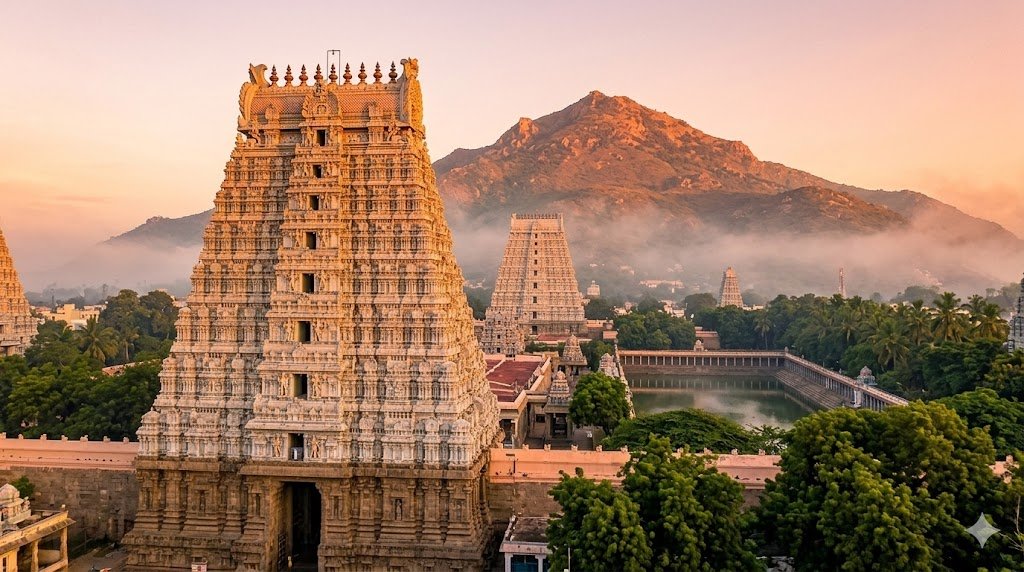
The ideal time to visit Tiruvannamalai temple changes with the season — discover month-by-month weather, festival dates, and Girivalam timings.
Choosing when to visit Tiruvannamalai temple matters far more than most pilgrims realise. The sacred town wears a completely different face in November under the Karthigai Deepam flame than it does in May under the brutal Tamil Nadu sun. Furthermore, the 14-km Girivalam path that feels meditative on a December full moon turns into an endurance test by mid-April. This month-by-month guide breaks down weather, festivals, crowd levels, and what to actually expect — so you can pick the window that suits your pilgrimage style.
Quick Summary at a Glance
- Overall best months: November to February — pleasant weather, major festivals, comfortable Girivalam conditions.
- Peak festival: Karthigai Deepam Mahadeepam — Tuesday, 24 November 2026.
- Karthigai Deepam Brahmotsavam dates: 15 November to 24 November 2026.
- Maha Shivaratri 2026: Sunday, 15 February 2026 (verify with local panchang).
- Temple darshan timings: 5:30 AM to 12:30 PM; 3:30 PM to 9:30 PM (extended on festival days).
- Girivalam distance: 14 km around Arunachala Hill — best on Pournami nights.
- Avoid: April to June (40°C+ heat) and peak Karthigai Deepam day if crowd-averse.
- Hidden gem months: January and September — fewer crowds, ashram retreats peaceful.
Why Timing Matters When You Visit Tiruvannamalai Temple
The Arunachaleswarar Temple is not just any Shiva shrine. It represents the Agni (fire) element among the five Pancha Bhoota Sthalams. Furthermore, the Arunachala Hill itself is worshipped as the living embodiment of Lord Shiva — making the 14-km Girivalam circumambulation as important as the temple darshan itself.
Therefore, your visit window directly shapes the experience. Winter pilgrims walk Girivalam under cool stars; summer pilgrims struggle through 40°C afternoons. Karthigai Deepam draws four to five million devotees in 48 hours; a quiet weekday in January may see only a few hundred at the sanctum. As a result, choosing the right month transforms an ordinary trip into a memorable pilgrimage.
Tiruvannamalai Weather and Climate Overview
The town sits in the rain-shadow plains of the Eastern Ghats and experiences three distinct seasons. Notably, the climate is drier than coastal Tamil Nadu but hotter than the hill regions.
| Season | Months | Temperature | Rainfall | Pilgrim Comfort |
|---|---|---|---|---|
| Winter | Nov – Feb | 18°C – 30°C | Light, occasional | Excellent |
| Summer | Mar – Jun | 28°C – 42°C | Very low | Difficult |
| Southwest Monsoon | Jul – Sep | 24°C – 34°C | Moderate | Moderate |
| Northeast Monsoon | Oct – Nov | 22°C – 31°C | Heavy bursts | Good (rain-dependent) |
Month-by-Month Guide to Visit Tiruvannamalai Temple
January — Cool, Calm, and Spiritually Charged
January is arguably the most underrated month for a Tiruvannamalai pilgrimage. Temperatures hover between 18°C and 28°C, mornings carry a slight nip, and the post-Karthigai crowds have thinned out considerably. Most importantly, the Pournami Girivalam on 3 January 2026 falls during cool, clear weather — ideal for the full 14-km walk.
Additionally, Thai Poosam celebrations bring a quieter spiritual energy compared to December. Ashrams like Sri Ramanasramam are calm enough for serious meditation retreats. Therefore, January suits pilgrims who want depth over spectacle.
February — Maha Shivaratri Magnitude
February brings the year’s second-biggest event — Maha Shivaratri, falling on Sunday, 15 February 2026 (please verify with the latest panchang). The temple stays open all night for continuous abhishekams and special poojas. Furthermore, lakhs of devotees walk Girivalam through the night, creating an unforgettable spiritual atmosphere.
Weather remains pleasant at 20°C to 30°C. However, accommodation books out four to six weeks in advance for Shivaratri week. Therefore, plan early or visit on regular weekdays when the town returns to its meditative pace.
March — The Last Comfortable Window
Early March still offers manageable temperatures, but the heat builds quickly after the 15th. Notably, Panguni Uthiram Thirukalyanam in late March is a beautiful celestial-wedding festival worth witnessing. Crowds remain moderate, and Girivalam is still doable in early mornings or evenings.
However, by the last week of March, daytime temperatures climb above 35°C. Therefore, plan darshan and circumambulation for pre-dawn hours. Pack light cotton, sunscreen, and a wide-brimmed hat.
April — Chitra Pournami’s Cosmic Pull
April is hot — daytime temperatures regularly cross 38°C. However, Chitra Pournami (the first full moon of the Tamil New Year) draws spiritual seekers from across India for a particularly powerful Girivalam. As a result, the experience is intense but demanding.
If you must visit Tiruvannamalai temple in April, do Girivalam between 3:00 AM and 7:00 AM or after 7:00 PM. Carry electrolyte sachets, two litres of water, and a torch. Most importantly, avoid midday temple visits — the granite courtyards become uncomfortably hot underfoot.
May — The Toughest Month for Pilgrims
May is the harshest stretch. Temperatures touch 40°C–42°C, the air is bone-dry, and even early mornings feel warm. Furthermore, the granite stones around the temple radiate heat well into the night.
However, May has one advantage — almost no crowds. If you can handle the heat and want uninterrupted darshan, you’ll have the temple practically to yourself outside Pournami. Ashram retreats also become significantly cheaper. Pre-dawn (4:30 AM) is the only realistic Girivalam window.
June — Heat Continues, Pre-Monsoon Hope
June carries forward May’s heat but offers occasional pre-monsoon thundershowers in the second half. Daytime temperatures stay around 35°C–40°C. Notably, evenings begin to feel marginally cooler after sunset.
Ani Brahmotsavam is a smaller festival celebrated this month with chariot processions. Therefore, if you don’t mind the heat, June offers cultural depth without the November–December crowds. Stay hydrated, schedule outdoor activities before 9:00 AM, and choose AC accommodation.
July — Monsoon Arrives, Landscape Transforms
July brings the southwest monsoon, although Tiruvannamalai sits in a partial rain shadow. As a result, showers are intermittent rather than continuous. Temperatures cool to 24°C–32°C, the Arunachala Hill turns a vivid green, and the town feels rejuvenated.
However, sudden downpours can disrupt the Girivalam walk. Therefore, carry a lightweight rain jacket and waterproof footwear. The Aadi Krithikai festival in mid-July is a small but spiritually significant event for Lord Murugan devotees.
August — Lush Green and Mostly Quiet
August continues monsoon patterns with light to moderate rain. The hill looks postcard-beautiful, especially in the morning mist. Furthermore, Aadi Pooram and Varalakshmi Vratham celebrations bring devotional energy without overwhelming crowds.
Hotel rates drop significantly, ashrams have plenty of space, and the cool, damp atmosphere suits long meditation sessions. However, leeches occasionally appear on the Girivalam path after heavy rain. Therefore, wear closed footwear if you plan to circumambulate.
September — Post-Monsoon Sweet Spot
September is genuinely underrated. The monsoon has cleansed the air, the hill is at its greenest, and temperatures settle at 24°C–32°C. Additionally, crowds remain minimal because Karthigai Deepam is still two months away.
Notably, the Navaratri preparations begin during this month, adding subtle festive energy without the chaos. Therefore, September suits travellers who want pleasant weather, photogenic landscapes, and meaningful temple time. Most importantly, Girivalam in September mornings — with mist rising off the hill — is a memory many pilgrims treasure for life.
October — Navaratri Brilliance Begins
October officially opens the pilgrimage season. Weather turns mild (22°C–30°C), and Navaratri celebrations bring nine days of goddess-centric rituals. Furthermore, the temple’s Kolu (doll display) and special abhishekams attract families.
Crowds start building but remain manageable until the Karthika Masam begins. As a result, October is excellent for first-time visitors who want a balance of festival energy and personal space. Book accommodation two to three weeks ahead during Navaratri week.
November — The Peak Month for Karthigai Deepam
November is when Tiruvannamalai becomes the spiritual centre of South India. The 10-day Karthigai Deepam Brahmotsavam runs from 15 November to 24 November 2026, culminating in the lighting of the Mahadeepam on Tuesday, 24 November 2026.
The Mahadeepam — lit using approximately 3,500 kg of ghee on top of Arunachala Hill — is visible from a radius of 35 km. Furthermore, four to five million devotees walk Girivalam on this single day. As a result, even the basics become difficult: hotels book out three months in advance, road traffic becomes near-impassable, and Girivalam can take 6 to 7 hours instead of the usual 3.5 hours.
However, the spiritual atmosphere is unmatched anywhere in India. Bharani Deepam is lit at 4:00 AM on Mahadeepam day, and the temple gates remain open continuously through the night. Plan logistics carefully or visit in the days immediately before or after the peak.
December — Festival Afterglow and Pleasant Weather
December retains the festive energy without the November chaos. Temperatures dip to 18°C–28°C, the Karthigai Maasam continues with daily lighting of lamps, and Theppotsavam (float festival) processions take place across multiple evenings.
Notably, Margazhi (mid-December onwards) is considered a deeply sacred month for Shiva worship. As a result, the temple sees a steady but manageable flow of pilgrims. Therefore, December offers winter weather, festive atmosphere, and reasonable crowds — making it ideal for a comprehensive pilgrimage experience.
Best Time for Different Types of Pilgrims
| Pilgrim Type | Best Months | Why |
|---|---|---|
| Festival enthusiasts | November (Karthigai), February (Shivaratri) | Witness major rituals and Mahadeepam |
| Meditation seekers | September, January, August | Quiet ashrams, calm energy |
| First-time visitors | December, January | Pleasant weather, moderate crowds |
| Photography lovers | September, October | Lush green hills, soft post-monsoon light |
| Budget travellers | July to September | Lower hotel rates, fewer crowds |
| Girivalam pilgrims | Nov, Dec, Jan, Feb | Cool nights ideal for 14-km walk |
| Heat-tolerant seekers | April, May (Chitra Pournami) | Powerful spiritual energy, empty town |
Pournami Girivalam Calendar 2026
The 14-km circumambulation around Arunachala Hill is most auspicious on full moon (Pournami) nights. Furthermore, pilgrims traditionally walk barefoot, starting in the cool evening hours. Below are the confirmed Pournami dates for 2026.
| Month | Pournami Date | Significance |
|---|---|---|
| January | 3 January 2026 | Paush Pournami |
| February | 1 February 2026 | Magha Pournami |
| March | 3 March 2026 | Phalguna Pournami / Holi |
| April | 1 April 2026 | Chaitra Pournami |
| May | 1 May 2026 | Chitra Pournami (highly auspicious) |
| May | 31 May 2026 | Buddha Pournami / Vaikasi |
| June | 29 June 2026 | Ani Pournami |
| July | 29 July 2026 | Guru Pournami / Aadi |
| August | 27 August 2026 | Raksha Bandhan / Aavani |
| September | 26 September 2026 | Purattasi Pournami |
| October | 25 October 2026 | Sharad Pournami |
| November | 24 November 2026 | Karthigai Pournami (Mahadeepam) |
| December | 23 December 2026 | Margazhi Pournami |
Verify exact tithi timings with Drik Panchang or a local panchang before planning, as full moon transitions vary slightly by region.
Daily Darshan Timings at Arunachaleswarar Temple
The temple maintains a consistent daily schedule, although festival days extend the timings significantly.
| Session | Timing | Highlights |
|---|---|---|
| Morning open | 5:30 AM | Ushatkala Pooja |
| Morning darshan | 6:00 AM – 12:30 PM | Kalasanthi at 8:00 AM, Uchikala at 10:00 AM |
| Afternoon break | 12:30 PM – 3:30 PM | Sanctum closed |
| Evening darshan | 3:30 PM – 9:30 PM | Sayaratchai at 6:00 PM, Ardha Jamam at 8:30 PM |
Insider Tips Most Visitors Miss
- Start Girivalam by 4:00 PM on Pournami: You finish under moonlight without exhaustion.
- Use the Pradosham Kala: Twice-monthly Pradosham evenings (13th lunar day) offer powerful temple energy with smaller crowds than Pournami.
- Visit Sri Ramanasramam early: Open from 5:00 AM, the ashram is peaceful before 8:00 AM.
- Skip the auto touts: The temple is walkable from most central hotels; avoid pre-arranged “package tours.”
- Carry small notes: Local prasadam vendors and shoe-stand attendants rarely have change for ₹500.
- Reserve Karthigai Deepam stays by September: Even ashram cottages fill up two months ahead.
- Try the eight Lingams on Girivalam: Each represents a directional planet — most pilgrims walk past unaware.
How to Reach Tiruvannamalai
The town is well-connected by road and rail, although the nearest airports are in Chennai and Bengaluru.
| From | Distance | Travel Time | Best Mode |
|---|---|---|---|
| Chennai | 185 km | 4 hours | Bus / Train / Taxi |
| Bengaluru | 210 km | 4.5 hours | Bus / Car |
| Tirupati | 240 km | 5 hours | Train / Car |
| Vellore | 80 km | 2 hours | Train / Bus |
| Pondicherry | 110 km | 2.5 hours | Car / Bus |
For full details on darshan procedures and ticketing, refer to the official Tamil Nadu HR&CE department website. Additionally, Drik Panchang remains the most reliable source for verifying tithi timings and Pournami dates.
Accommodation Strategy by Season
Where you stay matters as much as when you visit Tiruvannamalai temple. Furthermore, certain seasons demand specific booking strategies.
- Karthigai Deepam (Nov): Book by August. Ashrams, hotels, and homestays fill up first.
- Maha Shivaratri (Feb): Reserve four to six weeks ahead. Walk-ins almost impossible.
- December and January: Two-week buffer is usually sufficient.
- Summer months (Apr–Jun): Walk-in works; choose AC rooms only.
- Monsoon (Jul–Sep): Best value period; many hotels offer 30%–40% discounts.
The Bottom Line
The best time to visit Tiruvannamalai temple depends entirely on what you seek — spectacle or solitude, festival energy or quiet meditation. For most pilgrims, November to February delivers the strongest combination of pleasant weather, major festivals, and comfortable Girivalam conditions. However, if Karthigai Deepam crowds feel overwhelming, December and January offer the same winter beauty without the chaos. As a final tip, schedule your darshan and Girivalam around Pournami nights whenever possible — that single planning choice will elevate your pilgrimage from ordinary to unforgettable. Book your stay early, carry light cotton clothes, and let Arunachala do the rest.
Frequently Asked Questions
What is the best time to visit Tiruvannamalai temple?
November to February is the best time to visit Tiruvannamalai temple, offering pleasant temperatures of 18°C to 30°C and major festivals including Karthigai Deepam and Maha Shivaratri. Furthermore, these months provide ideal conditions for the 14-km Girivalam circumambulation around Arunachala Hill.
When is Karthigai Deepam 2026 at Tiruvannamalai?
Karthigai Deepam Mahadeepam 2026 falls on Tuesday, 24 November 2026, with the 10-day Brahmotsavam running from 15 to 24 November 2026. The Mahadeepam is lit at 6:00 PM using approximately 3,500 kg of ghee and is visible from a 35-km radius around Arunachala Hill.
Can I visit Tiruvannamalai during summer months?
Yes, but with caution — summer temperatures reach 40°C to 42°C between April and June, making midday temple visits and Girivalam difficult. However, Chitra Pournami in April draws serious devotees despite the heat. Therefore, schedule outdoor activities before 7:00 AM or after 7:00 PM and stay in AC accommodation.
How long does Girivalam take at Tiruvannamalai?
The 14-km Girivalam around Arunachala Hill typically takes 3 hours 30 minutes to 4 hours 15 minutes at a comfortable walking pace. However, on Karthigai Deepam day with massive crowds, the same walk can take 6 to 7 hours. As a result, plan your start time accordingly based on the day you visit.
What are Tiruvannamalai temple timings?
The Arunachaleswarar Temple opens daily from 5:30 AM to 12:30 PM and again from 3:30 PM to 9:30 PM. Furthermore, during major festivals like Karthigai Deepam and Maha Shivaratri, timings extend throughout the night to accommodate the massive devotee turnout.
Is Tiruvannamalai safe for solo female travellers?
Yes, Tiruvannamalai is widely considered safe for solo women, particularly meditation seekers staying at established ashrams like Sri Ramanasramam. However, take standard precautions — avoid walking alone late at night, keep belongings secure, and choose well-reviewed accommodation near the temple or ashram area.
How many days are enough to visit Tiruvannamalai?
A 2 to 3-day trip is ideal to visit Tiruvannamalai temple comfortably, covering Arunachaleswarar darshan, Girivalam on Pournami night, Sri Ramanasramam, Skandasramam cave, and Virupaksha cave. Additionally, an extra day allows day trips to Gingee Fort or Sathanur Dam if you want to combine spirituality with sightseeing.

The Tiruvannamalai Devasthanam editorial team is an independent group of writers and researchers documenting pilgrimage to the Arunachaleswarar Temple and Arunachala Hill, Tiruvannamalai. We are not affiliated with the temple or the Tamil Nadu HR\&CE Department. Every darshan timing, festival date and ritual detail we publish is cross-checked against the HR\&CE department, on-the-ground reports and at least two independent sources before it is published, and festival dates are re-verified each year. Spotted an error? Tell us and we will correct it.
