
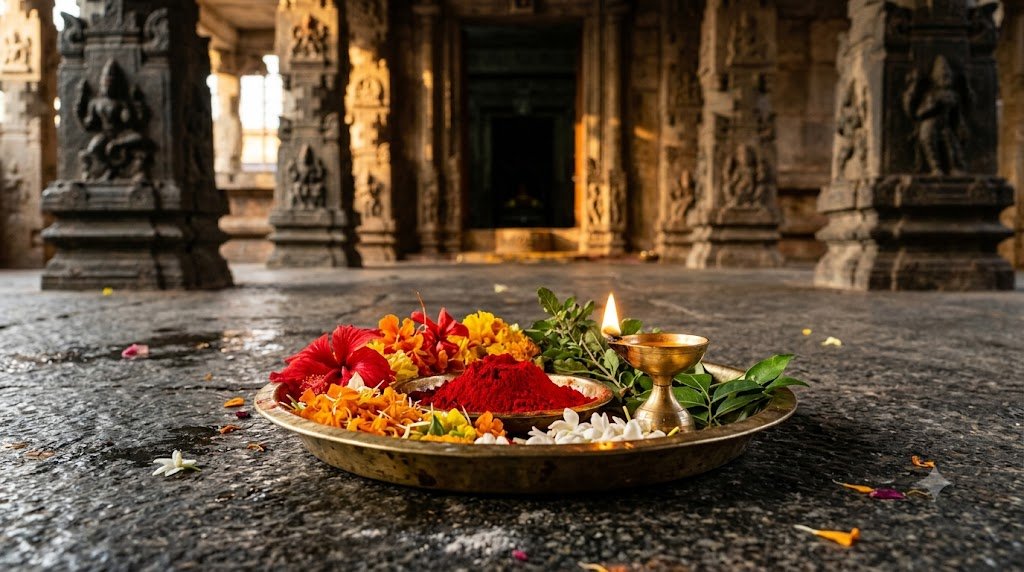
A Lalitha Sahasranama Archana is one of the most heartfelt ways to worship the Goddess at Tiruvannamalai, where the temple enshrines Devi as Unnamulai Amman beside Lord Arunachaleswarar. The rite offers her 1,000 sacred names one by one, so devotees turn to it for protection, peace and quiet strength. This guide explains what the archana means, when to offer it, and what it costs. It also shows how to arrange it at the Amman shrine, and it clears up the price confusion that floats around online.
Please note that this is an independent pilgrim guide. This page is not the official website of the Arunachaleswarar Temple or the HR&CE Department, and it carries no affiliation with them. We do not take bookings, donations or payments. For tickets and official details, use the temple’s own portal linked below.
Lalitha Sahasranama Archana at a Glance
- Deity: Unnamulai Amman (Apeetakuchamba), the Goddess consort of Arunachaleswarar.
- What it is: worship using the 1,000 names of Goddess Lalita, with kumkum and flowers.
- Best days: Fridays, full-moon (Pournami) days, and the nine nights of Navaratri.
- Standard archana ticket: issued at the temple counter. Figures quoted online for this temple vary widely and we could not confirm any of them against HR&CE.
- Full 1,000-name archana: request it at the Amman shrine counter, and confirm the offering amount there.
- Temple window: roughly 5:30 AM to 12:30 PM and 3:30 PM to 9:00 PM, subject to change.
What Is Lalitha Sahasranama Archana?
Lalitha Sahasranama Archana is the ritual worship of the Divine Mother through her thousand names. The priest recites each name and offers kumkum-tipped flowers at her feet. The names come from the Brahmanda Purana, and they describe Goddess Lalita Tripurasundari from head to foot. Devotees believe every name carries a distinct blessing, so they treat all thousand as one complete act of surrender.
The word archana simply means an offering of names. In the archana style, the priest frames each name with a sacred opening and closing. He then places a little kumkum or a flower before the deity.
So the ritual joins three things at once — sound, offering and devotion. That is why it feels so immersive, even for a first-time visitor to the Arunachaleswarar Temple. The red kumkum itself stands for the Mother’s living energy, so devotees treasure the pinch they carry home.
The story behind the 1,000 names
The hymn takes the form of a conversation between Sage Agastya and Hayagriva, an incarnation of Vishnu. Tradition holds that eight goddesses of speech composed the names on Lalita’s own command. She gave that command after she vanquished the demon Bhandasura.
The verses also encode the deeper Sri Vidya teachings, which link Devi to the Sri Yantra and the chakras. Even so, a devotee needs no special initiation to have the archana performed. The Mother receives every sincere prayer alike, whether the words are perfect or not.
Why Devotees Choose the Unnamulai Amman Shrine
At Tiruvannamalai, pilgrims worship the presiding Lord as the Agni Lingam, the fire form of Shiva. Yet his consort holds an equally beloved place. Her shrine sits within the second precinct of the vast complex.
Devotees revere her as the compassionate mother who softens Shiva’s fierce fire. Because she is a form of Parvati and Adi Shakti, the Lalita names suit her worship naturally.
Many South Indian pilgrims follow a simple custom. They greet the Goddess first, then walk on to the Lord’s sanctum. They believe the Mother carries their prayer forward.
So an archana at the Amman shrine is not a side ritual here — it often becomes the emotional heart of the visit. The quieter second precinct also gives you a calmer spot to stand and listen while the priest chants the names.
How Lalitha Sahasranama Archana Is Performed
The archana itself is short, personal and deeply moving. You give your name and star (nakshatra) at the counter and collect the ticket. Then you hand it to the priest at the Amman shrine. He recites the names, offers kumkum and flowers, and returns prasadam to you at the end.
Here is the usual flow, step by step:
- Reach the Amman shrine and join the archana line inside the temple.
- Buy an archana ticket at the counter, or carry your online receipt.
- Tell the priest your name and birth star, so he can perform the sankalpam in your name.
- Stand quietly while he chants the names and makes the offerings.
- Receive kumkum, vibhuti and flower prasadam before you leave.
A standard counter archana usually recites the shorter 108-name form, because queues move quickly through the day. A full 1,000-name Lalitha Sahasranama Archana takes longer, so priests generally arrange it in advance or offer it during festivals. When you want the complete Sahasranama, ask at the Amman counter about the timing and the offering amount first.
How the Archana Differs From Abhishekam and Homam
Devotees sometimes confuse these three offerings, though each works differently. An archana offers names with flowers and kumkum, and it stays short and simple. An abhishekam bathes the deity in milk, sandal and other sacred items, so it takes more time and costs more. A homam offers the names into a sacred fire, and priests usually perform it for a group or a special vow.
For most families, the archana is the easiest starting point. It needs no advance planning, and even a first-time visitor can join the line. If you want a fuller ritual for the Goddess, you can add an abhishekam separately, since our abhishekam booking guide covers those slots.
Booking Lalitha Sahasranama Archana in Tiruvannamalai
You can walk up to the shrine counter, or use the temple’s official online service run by the HR&CE Department. The standard archana ticket is modest, and the portal also lists special darshan and abhishekam options. A full Sahasranama archana, however, is not always a fixed online item, so you should confirm it directly at the temple.
Be careful with prices you see on aggregator sites. Several third-party pages quote invented figures for a “Lalitha Sahasranama Archana ticket”. We could not find any archana or darshan tariff published for this temple on the official HR&CE portal either.
Because rates and services change, always cross-check on the temple’s own page. Never pay any private number that claims to book sevas on the temple’s behalf.
Archana and seva fees at a glance
| Offering | What happens | Indicative fee |
|---|---|---|
| Basic archana | Priest offers names with kumkum and flowers | Ask at the counter |
| Special darshan | Shorter queue to the sanctum | Ask at the counter |
| Swamy–Amman special abhishekam | Ritual bath of both deities | Ask at the counter |
| Full 1,000-name archana | Complete Sahasranama chant | Confirm at Amman counter |
Why this page no longer quotes rupee figures
We could not find a published seva tariff for Arunachaleswarar Temple (HR&CE temple code TM020343) anywhere on the government portal, annamalaiyar.hrce.tn.gov.in. The figures we used to print here were not sourced from HR&CE, and they contradicted the figures on our own other pages — the same seva appeared at prices that differed several times over.
The seva counter inside the temple quotes the current rate, and HR&CE revises rates from time to time. That counter is the only authority we can point you to with confidence.
To book online, open the official Tamil Nadu HR&CE portal, choose the archana or special darshan service, pick your date, enter your details, and pay by UPI, card or net banking. Your e-ticket then arrives by email or SMS. If you prefer a walk-through, our Tiruvannamalai online booking guide covers each screen.
Best Days and Times to Offer the Archana
Fridays are the most cherished day for Devi worship, so the Amman shrine draws larger crowds and special poojas then. Full-moon Pournami days rank equally high, though the town fills up because of Girivalam. Tradition also links Tuesdays and Sundays with the Goddess.
Navaratri stands out as the peak season for a Lalitha Sahasranama Archana, since the nine nights honour the Divine Mother entirely. If you want a calm, unhurried archana, aim for a weekday morning soon after the temple opens. The post-lunch hours are usually the quietest, so that slot suits families with elderly members or small children. You can plan the rest of your day around the temple’s daily darshan timings.
What First-Time Pilgrims Often Miss
A little preparation makes the archana smoother. Since the priest performs the ritual in your name and star, memorise your nakshatra beforehand, or ask an elder in the family. That one detail saves fumbling at the counter while the queue waits behind you.
- Carry small change, because counters often lack card machines for the smallest tickets.
- Bring your own kumkum or flowers if you want them offered, though the temple provides its own too.
- Reach early on Fridays and Pournami, as the Amman line grows quickly.
- Keep phones switched off inside the sanctum, and follow the temple dress code.
- Ask the priest to repeat the sankalpam clearly if you missed it.
The temple expects modest traditional dress, so plan your clothing in advance. Our dress code guide spells out what men and women should wear.
A Note on Blessings and Wellbeing
Tradition attributes many blessings to the Lalitha Sahasranama — health, prosperity, courage and peace of mind. These are matters of faith and Sri Vidya belief, and we share them here as devotees understand them. They are not medical claims.
So treat the archana as spiritual support rather than a cure, and please continue any treatment your doctor has advised. Tiruvannamalai also stays very hot for much of the year, so carry water and rest often if you are elderly or fasting.
Before You Go
A Lalitha Sahasranama Archana asks for very little and gives back a great deal of calm. Pick a Friday, a Pournami, or any of the Navaratri nights if you can. Reach the Amman shrine with your name and star ready.
Book the basic archana online or at the counter, and enquire in person if you want the full thousand-name chant. Above all, verify the current fee on the official portal before you travel.
Frequently Asked Questions
What is Lalitha Sahasranama Archana?
It is the worship of the Divine Mother using her 1,000 names, while a priest offers kumkum and flowers. At Tiruvannamalai the temple offers the archana to Unnamulai Amman, the Goddess consort of Arunachaleswarar. Devotees seek her protection, peace and blessings through it.
How much does the archana cost at Arunachaleswarar Temple?
We could not find any archana or darshan tariff published for this temple on the official HR&CE portal, so we cannot quote you one. Priests arrange a full 1,000-name Sahasranama archana at the Amman counter, so confirm its offering amount there. Ignore inflated prices quoted on unofficial booking sites.
Can I book Lalitha Sahasranama Archana online?
You can book a standard archana and special darshan through the temple’s official online service. A full Sahasranama archana is not always a fixed online item, so you should request it in person at the Amman shrine. Always use the official portal, and never a private phone number.
Which is the best day to offer the archana?
Fridays are the most auspicious for Devi worship, followed by full-moon Pournami days and the Navaratri nights. Tradition links Tuesdays and Sundays with the Goddess too. For a quieter experience, choose a weekday morning soon after the temple opens.
Do I need any initiation to have the archana done?
You need no initiation or special qualification. Anyone may request the archana, since the Mother receives every sincere prayer. You only need your name and birth star for the sankalpam.
What prasadam do I receive after the archana?
The priest usually returns kumkum, vibhuti (sacred ash) and the flowers that he offered during the chant. Many devotees apply the kumkum on the forehead as a blessing. Carry a small cover to keep the prasadam clean.
Is the archana suitable for elderly pilgrims and children?
Yes, the archana is short and needs only quiet standing at the shrine. Choose the calmer post-lunch hours to avoid long queues. Carry water and rest as needed, because Tiruvannamalai can turn very warm.
How long does a Lalitha Sahasranama Archana take?
A short counter archana with the 108-name form takes only a few minutes. A full 1,000-name chant runs longer, often twenty to thirty minutes. Because timings vary with the crowd, reach the shrine early and ask the priest what to expect that day.
Can I offer the archana during Navaratri?
Navaratri is the peak season for Goddess worship, and the archana grows especially popular then. Expect larger crowds and special arrangements across the nine nights. Book early and reach the shrine well before your preferred time.

The Tiruvannamalai Devasthanam editorial team is an independent group of writers and researchers documenting pilgrimage to the Arunachaleswarar Temple and Arunachala Hill, Tiruvannamalai. We are not affiliated with the temple or the Tamil Nadu HR\&CE Department. Every darshan timing, festival date and ritual detail we publish is cross-checked against the HR\&CE department, on-the-ground reports and at least two independent sources before it is published, and festival dates are re-verified each year. Spotted an error? Tell us and we will correct it.
