This Thiruvannamalai pilgrim guide is built for one person: the first-time visitor standing at the foot of Arunachala Hill, unsure where to begin. Thiruvannamalai is the home of Arunachaleswarar Temple, where Lord Shiva is worshipped as fire. The town wraps around a sacred hill that devotees treat as Shiva himself.
Because a first visit can feel overwhelming, this Thiruvannamalai pilgrim guide keeps things simple. It covers darshan, the famous Girivalam walk, Karthigai Deepam, travel, and where to stay. So you can plan a calm, confident trip.
Thiruvannamalai Pilgrim Guide: Quick Facts
- Main temple: Arunachaleswarar Temple, one of the Pancha Bhoota Sthalams, representing fire (Agni).
- Signature walk: Girivalam, a 14 km barefoot circumambulation of Arunachala Hill, best on full-moon (Pournami) nights.
- Biggest festival: Karthigai Deepam, when a giant flame is lit atop the hill, usually in late November or December.
- Getting there: about 195 km from Chennai and 210 km from Bengaluru, with its own railway station 2 km from the temple.
- Best season: October to February, when the weather stays cool and outdoor walks feel comfortable.
What Makes Thiruvannamalai Special?
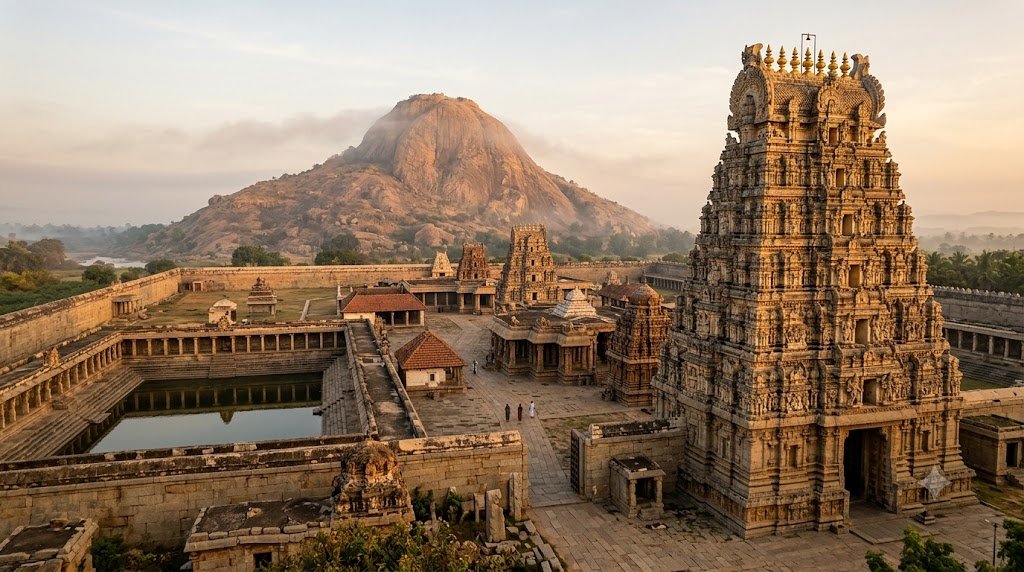
Thiruvannamalai is one of the five Pancha Bhoota Sthalams, the Shiva temples linked to the five elements. Here Shiva is worshipped as Agni, the element of fire. Devotees believe Arunachala Hill itself is a living form of Shiva, which is why walking around it carries such meaning.
The Arunachaleswarar Temple spreads across about 25 acres. Its eastern Rajagopuram rises around 66 metres, making it one of the tallest temple towers in India. Lord Shiva is worshipped here as Annamalaiyar, while the Goddess is worshipped as Unnamulai Amman. Because the hill is the real draw, this Thiruvannamalai pilgrim guide treats it as the heart of any trip.
Annamalaiyar or Arunachaleswarar: Are They the Same?
Yes, Annamalaiyar and Arunachaleswarar are two names for the same deity at the same temple. Arunachaleswarar is the Sanskrit-rooted name, while Annamalaiyar is the Tamil form. So when guides switch between the two, they still mean one shrine, not two.
The Tamil Nadu Hindu Religious and Charitable Endowments (HR&CE) Department manages the temple. You can verify timings and seva details on the official HR&CE temple portal.
A Thiruvannamalai Pilgrim Guide to Darshan and Timings
The Arunachaleswarar Temple usually opens around 5:30 AM and closes by about 9:00 PM, with a midday break. Most days follow a morning session and an evening session, with several poojas between. Because timings shift on festival days, confirm them locally before you go.
For a calm darshan, arrive early, between 5:30 AM and 8:00 AM. Evenings after the crowds thin are also peaceful. On Pournami and festival days, expect long queues and extended hours. For the full daily schedule, see our darshan timings guide.
Darshan tickets and booking
General darshan is free, while special-entry and VIP tickets cost a small fee at the counter. Online booking is not a permanent system here, since the temple enables it only during major festivals. So do not trust any site claiming guaranteed year-round online darshan tickets. Buy at the counter, or use official festival links when they open.
Girivalam: The 14 km Walk Around Arunachala
Girivalam, also called Giri Pradakshina, is the sacred 14 km walk around Arunachala Hill. You walk clockwise, keeping the hill on your right, past eight directional shrines called the Ashta Lingams. Most pilgrims take three to four hours at a gentle pace. The road is flat and suits all ages.
Devotees consider full-moon (Pournami) nights the most powerful time, when lakhs join the route. You can, however, walk on any day. For a quieter experience, choose a normal evening over a Pournami night. Our Girivalam guide maps every landmark.
Is barefoot Girivalam mandatory?
No, barefoot Girivalam is traditional but not compulsory. Many devotees walk barefoot for devotion, yet footwear is fine, especially for elderly walkers or anyone with health concerns. Because the road can turn hot or rough, comfort matters more than rigid rules. Walk safely, and the merit of the practice still stands.
Karthigai Deepam and the Maha Deepam
Karthigai Deepam is the town’s biggest festival, a ten-day Brahmotsavam in the Tamil month of Karthigai. It usually falls in late November or early December, so confirm the exact date for your year on Drik Panchang or official HR&CE notices. Lakhs of pilgrims arrive for the final day.
Two separate flames mark that day, and first-timers often confuse them. The Bharani Deepam is lit inside the temple before dawn, around 4 AM. The Maha Deepam, a giant flame in a cauldron of ghee, is lit atop Arunachala Hill at dusk, around 6 PM. That hilltop flame stays visible for miles.
How to Reach Thiruvannamalai
Thiruvannamalai sits in northern Tamil Nadu, well linked by road and rail. It lies about 195 km from Chennai, 210 km from Bengaluru, and just 85 km from Vellore. The town has its own railway station, Tiruvannamalai (TNM), about 2 km from the temple.
| From | Distance | Typical road time |
|---|---|---|
| Chennai | ~195 km | 4.5–5 hours |
| Bengaluru | ~210 km | 4.5–5 hours |
| Vellore | ~85 km | About 2 hours |
| Chennai Airport | ~190 km | Nearest major airport |
Trains connect from Chennai, Bengaluru, Villupuram, and Vellore, while frequent buses run from most South Indian cities. From the station or bus stand, autos reach the temple in minutes. For routes and tips, read our how to reach guide.
Where to Stay on Your First Visit
Thiruvannamalai offers three main types of stay. Private hotels and lodges cluster near the temple and along Girivalam Road. Temple and devasthanam lodges suit budget pilgrims, although rooms fill fast. Ashrams offer simple, quiet rooms, usually on a donation basis.
For quick darshan, stay within 1 km of the temple. For calm, pick Ramana Nagar or the Girivalam Road side. Book at least a week ahead, and far earlier for Pournami or Karthigai Deepam. See our accommodation guide for areas and tips.
Ashrams and the Arunachala Hill Caves
Thiruvannamalai is famous for its ashrams as much as its temple. Sri Ramanasramam, the ashram of Sri Ramana Maharshi, draws seekers from around the world. Nearby sit Seshadri Swamigal Ashram and Yogi Ramsuratkumar Ashram, both calm and welcoming.
On the hill itself are two meditation caves, Virupaksha Cave and Skandashramam, where Ramana Maharshi lived for years. The short climb takes about 45 to 90 minutes. Start early, carry water, and avoid the midday heat. Many pilgrims combine the climb with a morning darshan.
Best Time to Visit and What to Wear
The best months are October to February, when the weather stays cool, roughly 15 to 28°C. Summer afternoons turn harsh, so plan early-morning visits then. The monsoon brings green calm with occasional rain.
Full-moon weekends and festival weeks are spiritually charged but very crowded. For most first-timers, this Thiruvannamalai pilgrim guide suggests the cool October to February window, and Tamil Nadu Tourism lists seasonal events worth checking.
Dress modestly and traditionally inside the temple. Men wear a dhoti, veshti, or full pants, while women wear a saree or salwar kameez. Photography is not allowed inside the inner sanctum. Avoid stepping on the raised thresholds at the doorways.
A Simple Two-Day First-Visit Plan
This Thiruvannamalai pilgrim guide maps a simple two-day rhythm you can adjust. On day one, reach the temple by 6 AM for a calm darshan, then explore the praharams and rest through the midday heat. In the late afternoon, visit Sri Ramanasramam and climb to Virupaksha Cave before sunset. Keep that evening free, since dusk by the hill is the quietest, most reflective hour.
On day two, start the Girivalam early, or the evening before on a Pournami night. Pause at the Ashta Lingams, and stop for a meal at an annadhanam point. Afterwards, a final temple darshan rounds off the trip. So both days stay unhurried and meaningful.
Local Food and Annadhanam
Thiruvannamalai is a vegetarian temple town, so expect simple, sattvic meals. Small hotels near the temple serve idli, dosa, and South Indian thalis through the day. Many devotees also eat at the free annadhanam halls run by the temple and ashrams. Try the local filter coffee and a hot pongal breakfast before an early darshan.
Along the Girivalam route, volunteers and ashrams offer free food and water, especially on Pournami nights. Carry a little cash for tea stalls, because not every spot accepts digital payment. Stay hydrated too, since the walk is long and the afternoons stay warm.
Staying Safe on Your First Visit
Every careful Thiruvannamalai pilgrim guide should flag a few local cautions. On the Girivalam route, ignore anyone demanding money for water, tilak, or “blessings”, since authorities have banned such extortion and deploy patrols. Keep your phone and cash secure in the Pournami crowds.
Online, be just as careful. Because no permanent online darshan portal exists, treat “guaranteed ticket” websites with suspicion. Buy at the counter, use official festival links, and confirm anything doubtful with the temple. So a little caution keeps the focus on devotion.
Thiruvannamalai Pilgrim Guide: First-Visit Checklist
Run through this quick checklist before you travel, so nothing slips through.
- Book your stay early, because rooms vanish on Pournami and Karthigai Deepam days.
- Carry a photo ID, since counters and lodges often ask for it.
- Pack light cotton clothes plus traditional attire for darshan.
- Keep water and snacks ready for the Girivalam walk.
- Plan two days if you want both the temple and a relaxed Girivalam.
Before You Go
A first trip to Thiruvannamalai rewards slow, simple planning. Reach the temple early for darshan, walk the Girivalam at a gentle pace, and leave time to sit quietly near the hill. Treat the rituals as devotion and tradition rather than a checklist of guaranteed outcomes.
Give yourself two unhurried days if you can. Book your stay ahead, dress simply, and confirm timings before festival dates. With that, this Thiruvannamalai pilgrim guide should carry you smoothly from arrival to a peaceful return.
Frequently Asked Questions
How many days do I need for a first visit to Thiruvannamalai?
Two days is ideal for a first visit. One day covers temple darshan and a partial walk, while the second allows a relaxed Girivalam, the ashrams, and the hill caves. A single day works only if you are short on time.
What are the Arunachaleswarar Temple darshan timings?
The temple generally opens around 5:30 AM and closes by about 9:00 PM, with a midday break. Early morning and late evening are the calmest hours. Timings extend on Pournami and festival days, so confirm them locally.
Can I book darshan tickets online?
Not as a permanent system. The temple enables online booking only during major festivals, so most days you buy special-entry tickets at the counter. Avoid sites promising guaranteed year-round online darshan tickets.
Is Girivalam difficult for first-timers?
No, the 14 km route is flat and suits most ages. At a gentle pace it takes three to four hours. Carry water, start early or at night to avoid heat, and rest at the shrines along the way.
When is Karthigai Deepam celebrated?
Karthigai Deepam falls in the Tamil month of Karthigai, usually late November or early December. The exact date changes each year with the lunar calendar. Confirm it on Drik Panchang or official HR&CE notices before booking.
Is barefoot Girivalam compulsory?
No. Walking barefoot is traditional but optional. Footwear is perfectly acceptable, especially for elderly pilgrims or anyone with foot or health issues.
Which is the nearest airport and railway station?
Chennai International Airport is the nearest major airport, about 190 km away. Tiruvannamalai railway station is only about 2 km from the temple, with trains from Chennai, Bengaluru, and Vellore. Frequent state and private buses connect the same cities too, so you are rarely stuck for transport.
Is this Thiruvannamalai pilgrim guide enough to plan a first trip?
Yes, it covers the essentials a first-timer needs: darshan, Girivalam, festivals, travel, and stays. For deeper detail on any one topic, follow the linked guides. Always confirm changeable timings and dates before you travel.

The Tiruvannamalai Devasthanam editorial team is an independent group of writers and researchers documenting pilgrimage to the Arunachaleswarar Temple and Arunachala Hill, Tiruvannamalai. We are not affiliated with the temple or the Tamil Nadu HR\&CE Department. Every darshan timing, festival date and ritual detail we publish is cross-checked against the HR\&CE department, on-the-ground reports and at least two independent sources before it is published, and festival dates are re-verified each year. Spotted an error? Tell us and we will correct it.
